~$ man sqlalchemy
What is SQLAlchemy (Python ORM)?
definition
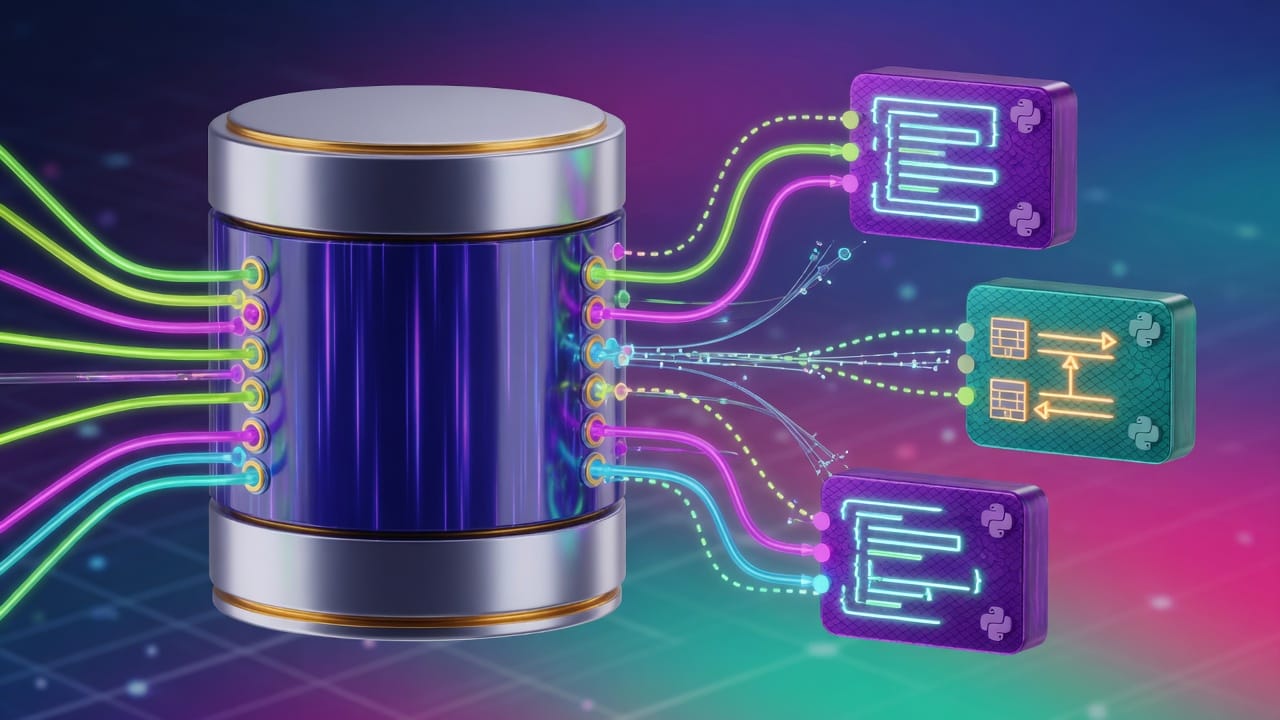
SQLAlchemy is a Python library that acts as both a SQL toolkit for writing queries and an ORM that maps database tables to Python classes and objects.
Developers use it to define models as classes, perform CRUD operations through object methods, and switch between raw SQL and ORM syntax as needed.
It supports multiple database backends via dialects and includes connection pooling plus transaction management.
SQLAlchemy works like a universal remote that translates button presses on your Python controller into the right commands for any TV brand (database) and shows the results back on your screen in a language you already know.
key takeaways
- SQLAlchemy supports both raw SQL execution and high-level ORM object mapping in the same codebase.
- It connects to PostgreSQL, MySQL, SQLite and other engines through a single consistent API.
- Model classes automatically generate table schemas and handle relationships between tables.
- Sessions track changes and commit or roll back transactions safely.
- Alembic migrations integrate directly to evolve database schemas over time.
the 2026 job market
In 2026 Python backend and data roles continue to list SQLAlchemy as a required skill for any position that persists structured data, especially in web services and analytics pipelines where teams need portable query code across database vendors.
frequently asked questions
How does SQLAlchemy differ from the Django ORM?
SQLAlchemy is database-agnostic and gives finer control over queries and mappings, while Django ORM is tied to Django projects and favors convention over explicit configuration.
Can SQLAlchemy be used without the ORM layer?
Yes, the Core layer lets developers write SQL expressions directly in Python and execute them against any supported database without defining classes.
What is the role of a Session in SQLAlchemy?
A Session tracks object changes, manages transactions, and coordinates persistence so that modifications are committed or rolled back as a single unit.
Does SQLAlchemy support asynchronous database access?
Recent versions include async support through asyncio-compatible engines and sessions for applications using async frameworks like FastAPI.
courses to go further