~$ man rag
What is RAG (Retrieval-Augmented Generation)?
definition
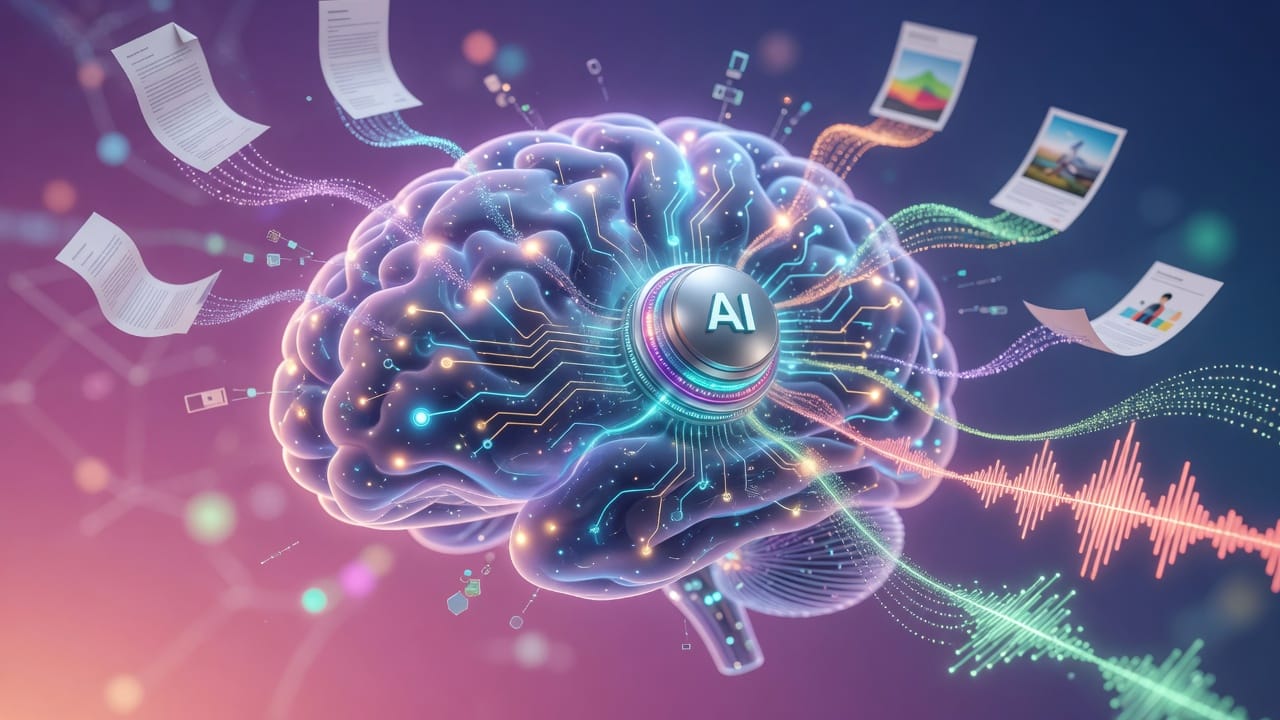
RAG is a technique that pairs a retrieval system with a generative language model. The retrieval step searches a knowledge base for relevant documents or passages using vector similarity. Those passages are then inserted into the model prompt so the generated text is conditioned on external data.
Typical RAG pipelines include an embedding model, a vector database, a reranker, and an LLM. The embedding model converts both the user query and stored documents into vectors. At inference time the system fetches the top matches and feeds them to the LLM along with the original question.
RAG reduces hallucinations and allows models to use private or frequently changing information without retraining. It is widely applied in enterprise chatbots, question-answering systems, and knowledge assistants.
Imagine writing a report: instead of relying only on memory you first open a filing cabinet, pull the right folders, read the pages, then write using those facts so the final text matches the documents.
key takeaways
- RAG adds an external knowledge source to an LLM at generation time.
- It lowers factual errors by grounding answers in retrieved text.
- Vector databases store document embeddings for fast similarity search.
- RAG works with both open-source and closed-source language models.
- Common production stacks combine LangChain or LlamaIndex with databases such as Pinecone or Weaviate.
the 2026 job market
By 2026 companies need engineers who can build reliable LLM applications that stay accurate over time. Demand is rising for roles that implement retrieval pipelines, manage vector stores, and evaluate RAG quality. Job titles include AI Engineer, LLM Application Developer, and Generative AI Specialist across product, consulting, and internal tooling teams.
frequently asked questions
How does retrieval work inside a RAG system?
A user query is turned into a vector by an embedding model. The vector database returns the most similar stored passages using cosine or dot-product similarity. Those passages are concatenated into the prompt sent to the language model.
What are the main limitations of basic RAG?
Simple RAG can retrieve irrelevant chunks or miss context across long documents. It also adds latency from the extra retrieval step and requires careful chunking and indexing choices. Advanced variants add reranking, query rewriting, or agent loops to mitigate these issues.
Which vector databases are commonly used with RAG?
Pinecone, Weaviate, Milvus, Chroma, and PGVector are frequent choices. Each offers different trade-offs in managed hosting, filtering capabilities, and scaling behavior. Selection depends on data volume, latency needs, and existing infrastructure.
How does RAG compare to fine-tuning an LLM?
RAG keeps the model weights frozen and supplies fresh data at inference time while fine-tuning changes the model itself. RAG is faster to update and cheaper for domain-specific knowledge that changes often. Fine-tuning is better when the goal is to alter style, reasoning patterns, or reduce model size.