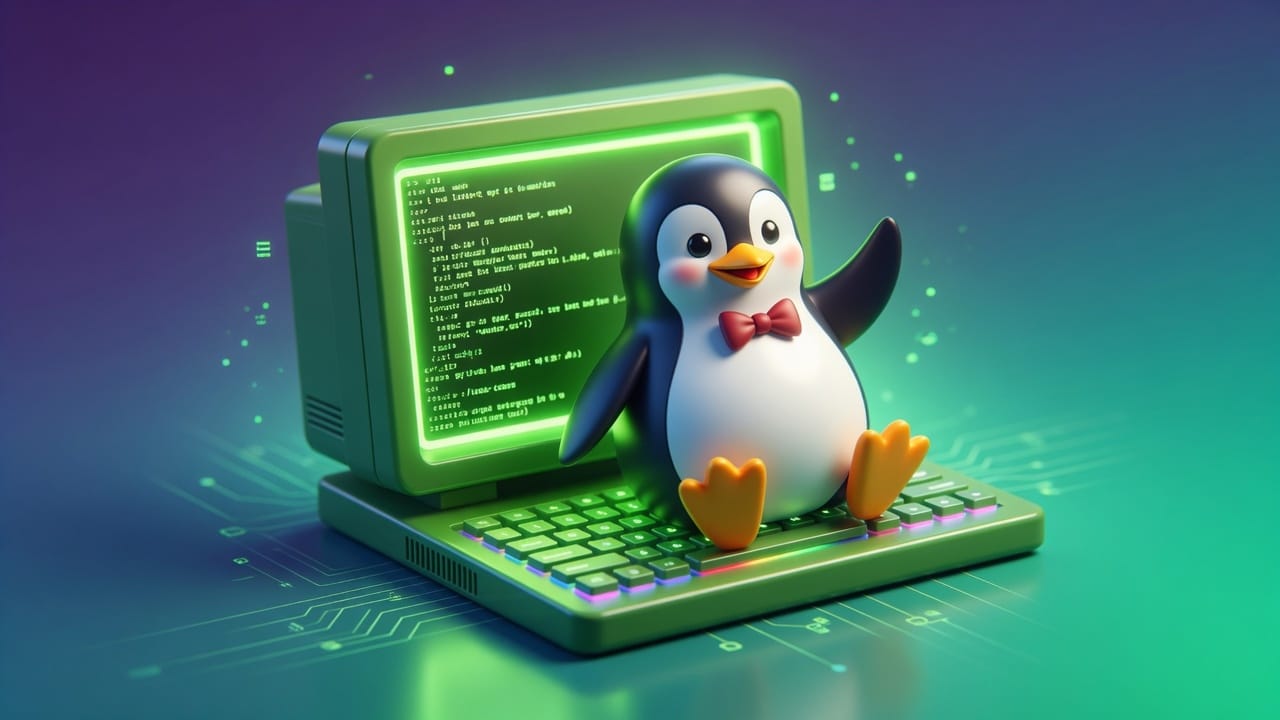
~$ man linux
What is Linux (and why learn it)?
definition
Linux is an open-source operating system kernel first released in 1991 by Linus Torvalds. It forms the base for many full operating systems called distributions, such as Ubuntu, Fedora and Debian.
The system follows Unix principles, uses a command-line interface by default, and supports multitasking and multi-user access. It runs on servers, desktops, mobile devices and embedded hardware.
Because the source code is freely available, anyone can inspect, modify and redistribute it under open-source licenses.
Linux works like a public park that anyone can enter, improve or copy, instead of a private garden owned by one company that charges entry and controls every change.
key takeaways
- Linux source code is free to view, change and share under open licenses.
- It powers over 90 percent of public cloud servers and most web servers.
- Command-line tools and shell scripting form the core skills for automation.
- Distributions bundle the kernel with different software and support models.
- Linux skills transfer directly to containers, Kubernetes and cloud platforms.
the 2026 job market
In 2026 Linux administration remains a baseline requirement for Cloud Engineer, Site Reliability Engineer and DevOps roles because the majority of container platforms, CI/CD pipelines and public cloud instances run on Linux distributions.
frequently asked questions
How do I start using Linux on my computer?
Download a distribution such as Ubuntu, create a bootable USB drive and install it alongside or instead of your current operating system. Virtual machines or Windows Subsystem for Linux also let you try it without changing hardware.
What is the difference between Linux and Unix?
Unix refers to a family of proprietary operating systems developed in the 1970s. Linux is an open-source kernel written from scratch that behaves like Unix and runs Unix software.
Do I need to use the command line with Linux?
Graphical desktops exist, yet most server and DevOps work happens through the terminal. Learning basic shell commands gives direct control over files, processes and automation scripts.
Which Linux distribution should beginners choose?
Ubuntu or Fedora provide large communities, regular updates and simple installers. Both include graphical tools while still exposing the full command-line environment used in professional settings.