~$ man gan
What is a GAN (Generative Adversarial Network)?
definition
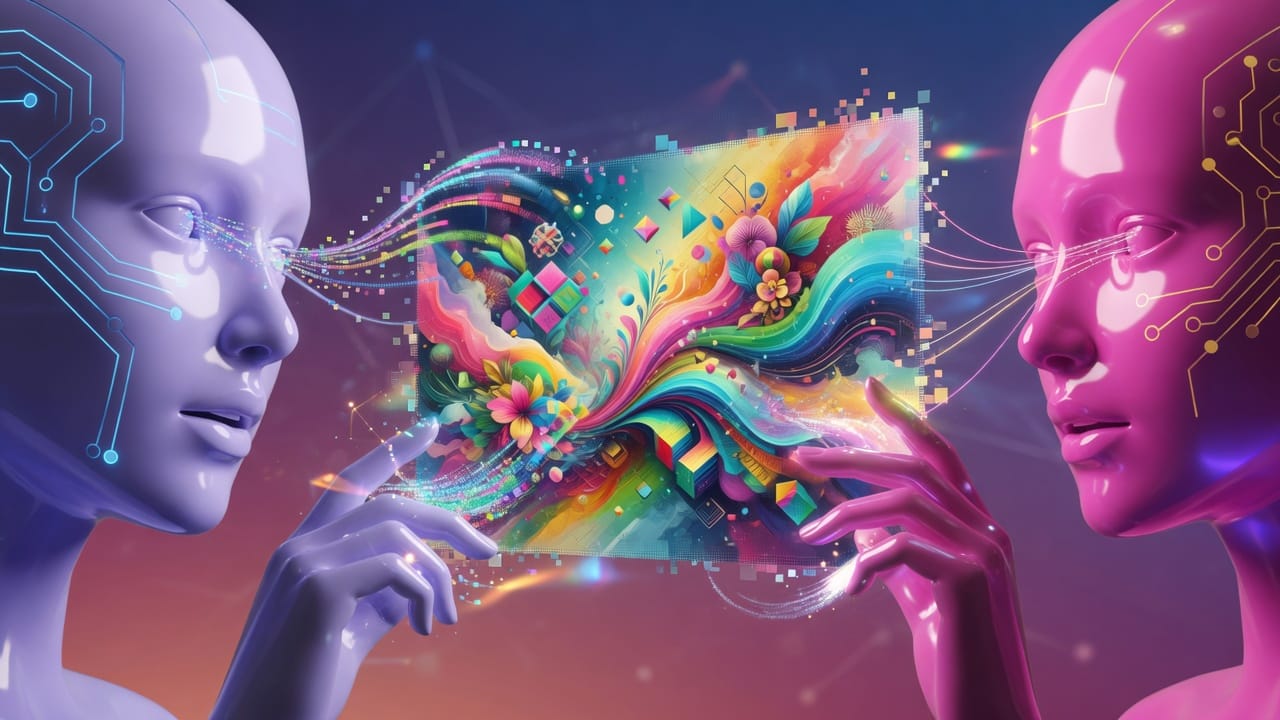
A GAN, short for Generative Adversarial Network, is a machine learning setup with two neural networks that train together through competition.
The generator network creates new data samples while the discriminator network tries to tell real data from the generated samples. Training continues until the generator produces outputs the discriminator can no longer reliably detect as fake.
A GAN works like a forger making counterfeit paintings and an art expert trying to spot the fakes; each round the forger improves until the expert cannot tell the difference anymore.
key takeaways
- GANs contain exactly two competing neural networks called the generator and the discriminator.
- Training uses a minimax game where the generator tries to fool the discriminator and the discriminator tries to stay accurate.
- Common outputs include realistic images, videos, and audio that did not exist in the training set.
- GANs require large amounts of data and careful tuning to avoid problems like mode collapse.
- Variants such as StyleGAN and CycleGAN extend the basic idea for specific tasks like style transfer.
the 2026 job market
By 2026 demand grows for engineers who can build and stabilize GAN pipelines in creative tools, synthetic data generation, and media production; roles appear in AI labs, game studios, and companies focused on generative content.
frequently asked questions
How do you train a GAN step by step?
You alternate updates between the generator and discriminator on batches of real and fake data. The discriminator loss teaches it to label correctly while the generator loss pushes it to create harder examples. This loop repeats for many epochs with learning rate schedules.
What problems do GANs commonly face during training?
Mode collapse occurs when the generator produces only a few varieties of output. Vanishing gradients can stop the generator from learning. Instability often requires techniques like label smoothing or spectral normalization.
Which industries use GANs the most today?
Entertainment and gaming rely on them for texture and character generation. Healthcare uses them to create synthetic medical images for training other models. Advertising and design teams apply them for rapid visual prototyping.
Are there simpler alternatives to GANs for generating images?
Diffusion models have become popular because they often produce higher quality results with more stable training. Variational autoencoders offer a probabilistic approach that is easier to train but usually yields blurrier outputs. Both can complement or replace GANs depending on the task.