Transformers and Attention: How AI Learned to Focus
Discover how the attention mechanism of Transformers has revolutionized NLP and modern AI thanks to a simple and powerful approach.
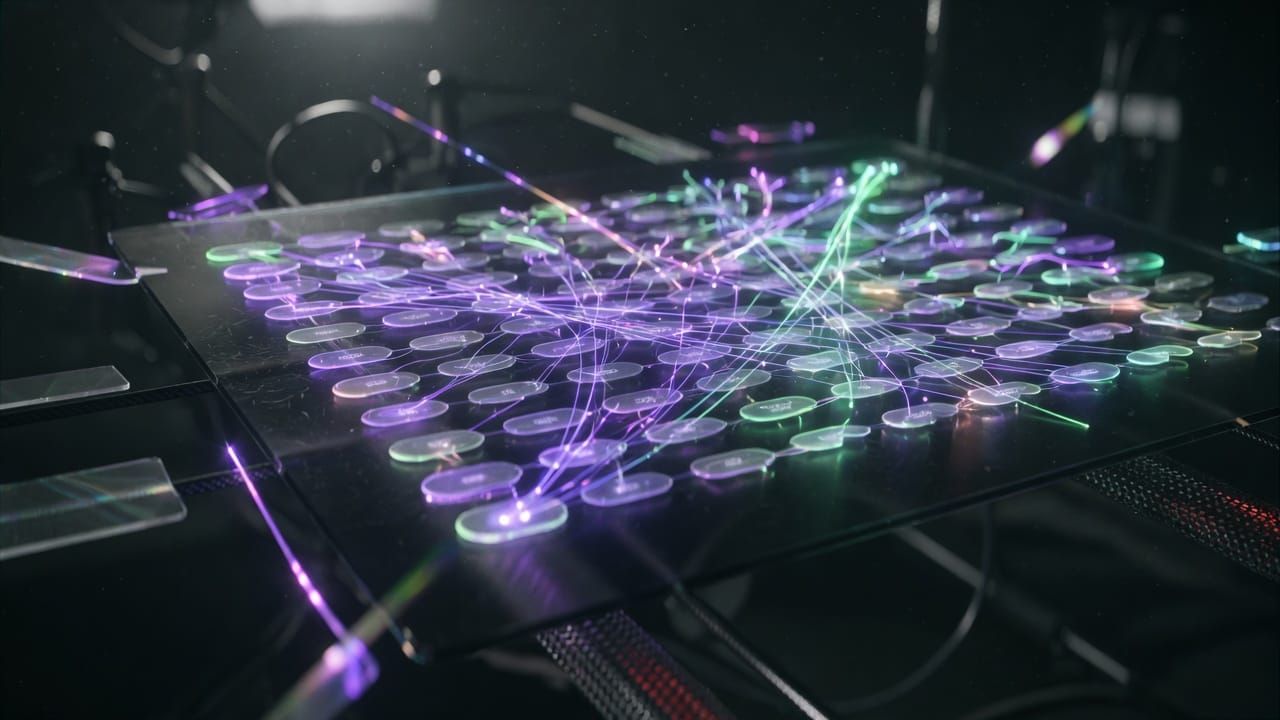
Imagine reading a long text and having to remember every single word to understand what comes next. That’s exactly the problem early AI models like RNNs faced. Then came the Transformers, which changed everything thanks to a key concept: attention. In this article, we’ll explore this architecture in a simple and concrete way, without complex equations, so you can understand why it dominates artificial intelligence today.
What is the Attention Mechanism?
Attention allows a model to focus on the important parts of a sequence, rather than processing everything uniformly. For example, in the sentence “The cat sleeps on the rug because it is tired”, the word “it” refers to the cat, not the rug. A model with attention learns to “look at” the right word at the right moment.
- It calculates an importance score between each pair of words.
- It weights the information according to these scores.
- Result: a more precise understanding of the context.
Why Have RNNs Been Surpassed?
Recurrent neural networks (RNNs) process data sequentially, word by word. This creates two major problems: they forget older information when the sentence is long, and they are slow because they cannot process multiple words in parallel. Transformers solve these limitations by processing the entire sequence at once while maintaining context through attention.
The Heart of Transformers: Multi-Head Attention
In a Transformer, attention is not unique. Multiple attention “heads” are used that simultaneously learn different types of relationships. One head can focus on grammar, another on meaning, and a third on the links between subjects and verbs. These heads work in parallel, then their results are combined. It’s a bit like having multiple readers who analyze the same text from different angles before sharing their conclusions.
The Encoder-Decoder Architecture Explained
A classic Transformer consists of two main parts. The encoder reads and understands the input (for example, a sentence in French). The decoder generates the output (for example, the translation into English). Each layer contains attention blocks and simple neural networks. This structure enables a wide variety of tasks: translation, summarization, text generation, or even image analysis with Vision Transformers models.
Concrete examples of use today
Transformers are everywhere. GPT uses this architecture to generate text. BERT employs it to understand the meaning of sentences in search engines. Even image generation models like DALL-E rely on the same attention principle. Their strength? They adapt to almost any domain once trained on large amounts of data.
The advantages that explain their success
Thanks to attention, Transformers are faster to train, handle very long contexts, and achieve better quality results. They paved the way for current large language models. However, they require a lot of data and computing power, which remains a challenge for small projects.
Transformers have transformed AI by enabling machines to truly « understand » the context. Whether you are a beginner or want to go deeper, mastering the concept of attention is now essential to grasp the latest advances in artificial intelligence. Experiment with tools like Hugging Face to see these models in action!
💬 Have a question or want to go further? Join the community on Discord: https://discord.gg/GwhUKccQcM