Convolutional Neural Networks: How Computers Learn to See Images
Discover how CNNs analyze images step by step, with concrete examples to better understand how they work.
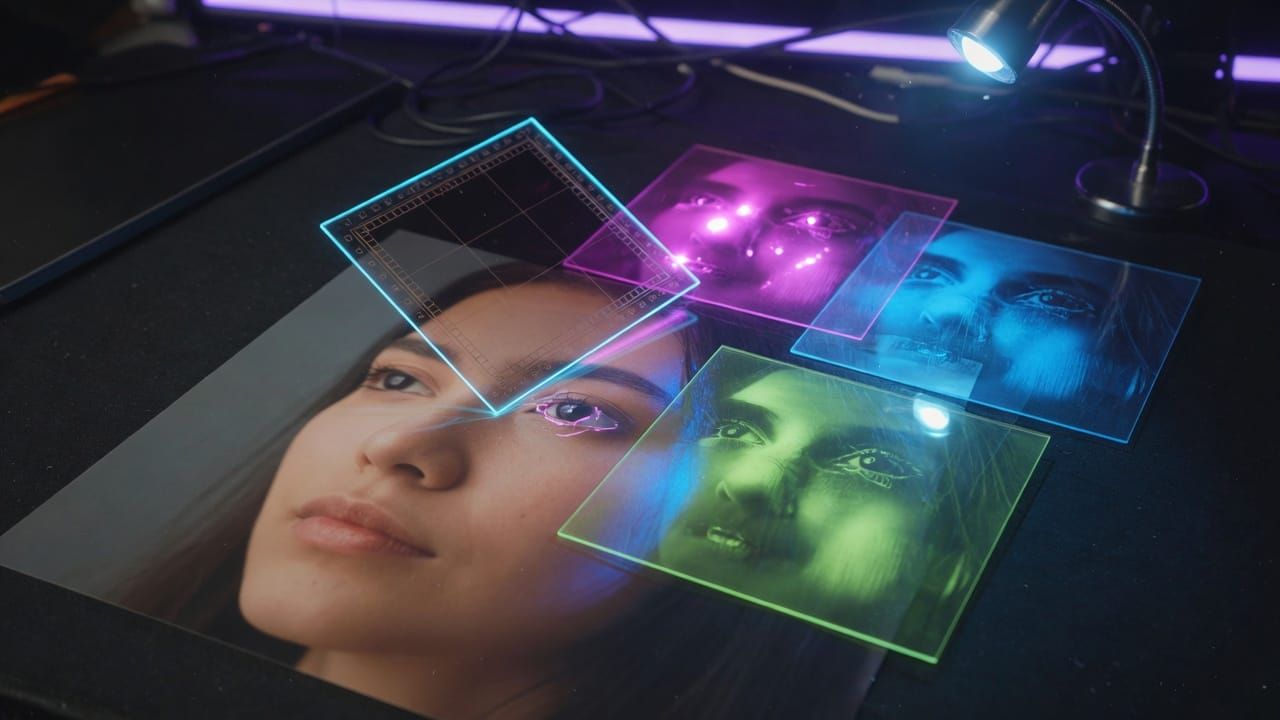
Convolutional neural networks, or CNNs, have revolutionized computer vision. Unlike traditional networks that process each pixel in isolation, CNNs mimic the human visual cortex by detecting local patterns such as edges or textures. They excel at object recognition, image classification, and even face detection in your vacation photos.
Why Are CNNs Perfect for Images?
An image contains thousands of pixels, but much of the information is redundant. A CNN exploits this spatial structure using filters that slide over the image. This drastically reduces the number of parameters compared to a classic dense network. For example, to recognize a cat, the network first detects pointed ears, then the eyes, and finally the entire body.
Convolution: The Heart of the System
The convolution layer applies filters (or kernels) to the input image. Each filter detects a specific feature: a vertical edge, a bright color, or a rough texture. The result is an activation map that highlights where this feature appears. The more layers we stack, the more complex the patterns become, going from simple lines to complete shapes like a wheel or an ear.
- A 3x3 filter scans the image pixel by pixel.
- Each position calculates a value by multiplying the pixels by the filter's weights.
- Multiple filters produce multiple feature maps.
Pooling to Simplify Information
After convolution, pooling reduces the size of the feature maps while retaining the essentials. Max-pooling, for example, keeps only the maximum value in a small area. This makes the network more robust to small translations of the object and reduces the required computation. Imagine looking at a blurry photo: you can still recognize the overall shape without seeing every detail.
A complete architecture in practice
A typical CNN chains several convolution + pooling blocks, then flattens the data to pass it to fully-connected layers that perform the final classification. Famous models like LeNet or ResNet follow this principle with deeper variants. Today, frameworks like PyTorch or TensorFlow allow building these architectures in just a few lines.
import torch.nn as nn
model = nn.Sequential(
    nn.Conv2d(3, 32, kernel_size=3),
    nn.ReLU(),
    nn.MaxPool2d(2),
    nn.Flatten(),
    nn.Linear(32*16*16, 10)
)
Practical Applications and First Steps
CNNs power Instagram filters, self-driving cars, and medical imaging diagnostics. To get started, train a small model on the MNIST or CIFAR-10 dataset. Start by modifying the number of filters or the kernel size and observe the impact on accuracy. Interactive tutorials on Google Colab let you experiment without installing anything.
By mastering CNNs, you open the door to exciting computer vision projects. Experiment, tweak the hyperparameters, and watch your model learn to “see” the world pixel by pixel.
💬 Have a question or want to go further? Join the community on Discord: https://discord.gg/GwhUKccQcM