Reinforcement Learning: When AI Learns Through Trials and Rewards
Discover how reinforcement learning allows AIs to learn on their own through trials, errors, and rewards, with concrete and accessible examples.
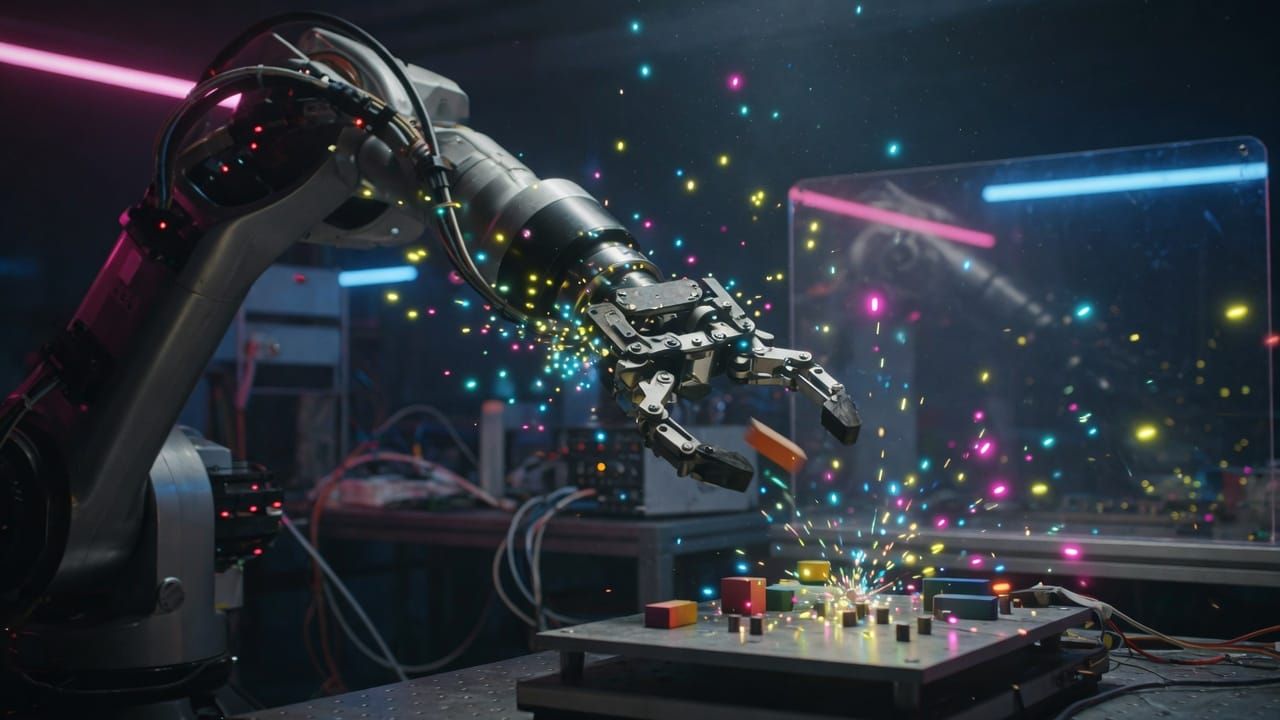
Reinforcement learning is an exciting branch of artificial intelligence in which an agent learns to make decisions by interacting with its environment, much like a child discovering the world through trial and error. Unlike supervised learning, which requires labeled data, here the agent explores, receives feedback in the form of rewards or penalties, and gradually refines its strategy to maximize its long-term gain. This article guides you step by step through its principles, components, and applications.
The Fundamental Principles of Reinforcement Learning
Imagine a robot learning to walk: at first, it often stumbles and receives penalties, but each successful step earns it a small reward. This iterative process relies on exploration (trying new actions) and exploitation (using what already works). The goal is not to succeed once, but to optimize cumulative rewards over time.
- The agent observes the current state of the environment.
- It chooses an action among several possibilities.
- The environment responds with a new state and a reward.
- The agent updates its policy for better future decisions.
Key Components: Agent, Environment, and Rewards
Every reinforcement system revolves around three main elements. The agent is the entity that learns and acts. The environment is the world in which it evolves, whether it is a video game or a robotic factory. Finally, the reward function guides learning by assigning positive or negative scores to actions.
- Agent: the “brain” that decides the actions.
- Environment: the context that changes after each action.
- Reward: the signal that indicates whether the action was good or bad.
- Policy: the strategy the agent follows to choose its actions.
A Concrete Example: Training an Agent in a Game
Consider the classic game of Pong. The agent controls the paddle and observes the ball's position. Initially, it often misses, but each time it returns the ball, it scores points. Over thousands of games, it learns to anticipate trajectories and defeat its opponent without any explicit programming of the game's rules.
Popular Algorithms Explained Simply
Among the best-known methods, Q-learning enables the agent to store the value of each action in every situation. Policy gradient methods, on the other hand, directly adjust the probability of actions based on the outcomes obtained. These approaches are used in systems such as AlphaGo or autonomous robots.
- Q-learning: updating a Q-value table for each state-action pair.
- Deep Q-Network: uses a neural network to handle complex environments.
- Policy Gradient: directly optimizes the agent's policy.
How to Get Started with Reinforcement Learning
To get started, begin with simple environments like those provided by OpenAI's Gym library. Experiment with basic scripts that implement a random agent, then move on to versions that learn. The key is patience: training may require millions of iterations.
import gym
env = gym.make('CartPole-v1')
state = env.reset()
for _ in range(100):
    action = env.action_space.sample()
    state, reward, done, _ = env.step(action)
This small example illustrates the basic loop: observe, act, receive feedback.
Challenges and Future Perspectives
While the approach is powerful, it also poses challenges: rare rewards, unstable environments, or the need for extensive computation. Researchers are working on more efficient and safer methods, particularly for applications like autonomous driving or energy management. The future promises agents capable of learning with less data and more common sense.
In summary, reinforcement learning offers a fascinating path to creating autonomous and adaptive AIs. By understanding its fundamentals, you are ready to explore further and perhaps even train your first agent!
💬 Have a question or want to go further? Join the community on Discord: https://discord.gg/GwhUKccQcM