Reinforcement Learning: The AI That Learns by Trial and Error
Discover how reinforcement learning allows machines to learn like humans, thanks to rewards and experience.
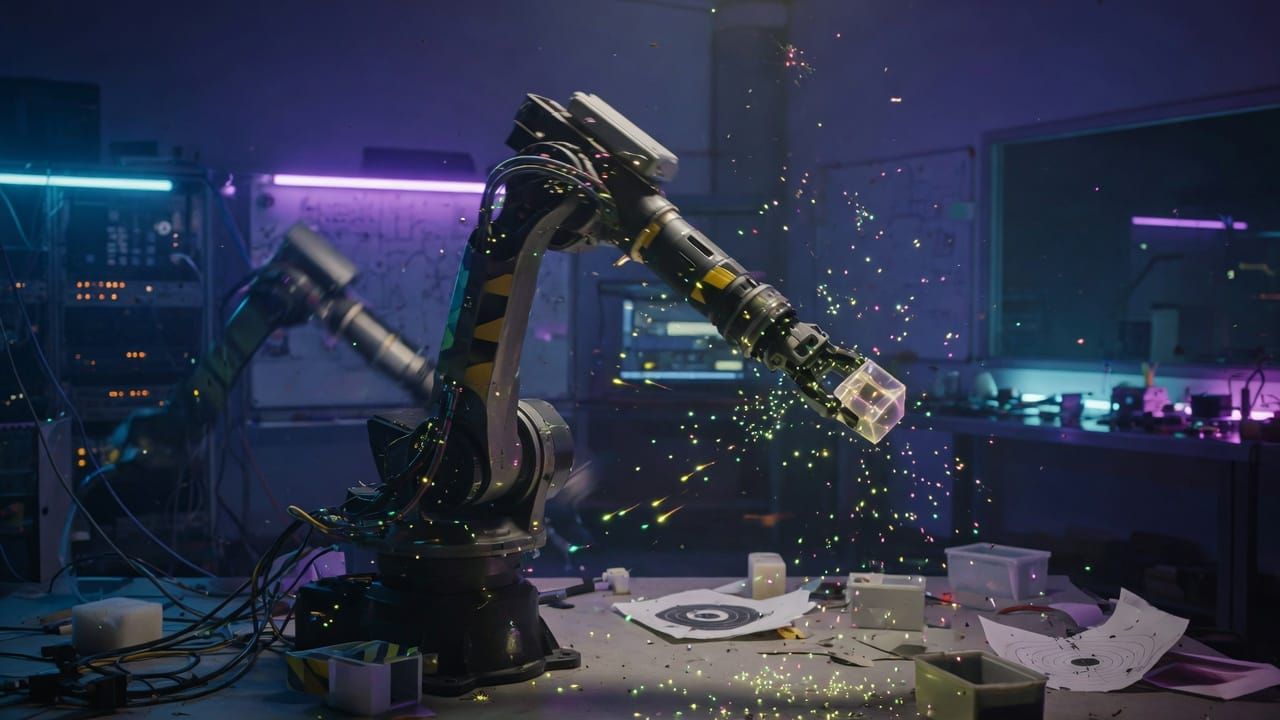
Reinforcement learning (RL) is an exciting branch of artificial intelligence where an agent learns to make decisions by interacting with its environment. Unlike supervised learning, which requires labeled data, RL relies on trial and error and rewards, much like a child learning to walk by falling and getting back up. In this article, we'll explore this concept in a simple and concrete way for beginners.
What is reinforcement learning?
RL consists of training an agent to maximize cumulative reward over time. The agent explores different actions, observes the results, and adjusts its strategy. For example, imagine a robot learning to navigate a maze: each time it finds the exit, it receives a positive reward, and each wall hit gives it a penalty.
The Essential Components of RL
To understand RL, you need to master four key elements:
- The agent: the entity that makes the decisions, such as software or a robot.
- The environment: the world in which the agent operates, for example a video game or a factory.
- The actions: the possible choices of the agent at each step.
- The rewards: the feedback signals that guide learning.
The Role of Rewards and Policy
Reward is the driving force of RL. The agent seeks to maximize the sum of rewards over the long term. It then develops a “policy”, that is, a strategy indicating which action to choose in each situation. At first, the agent explores at random, then it exploits the actions that have worked well in the past.
A Concrete Example: An Agent Playing a Game
Let's consider an agent learning to play Pong. Initially, it hits the ball at random. When it scores a point, it receives +1. After thousands of games, it learns the best angles and movements. Here's a simplified example of a training loop:
while not done:
    action = agent.choose_action(state)
    next_state, reward, done = env.step(action)
    agent.update_policy(state, action, reward, next_state)
Real-world Applications and Current Challenges
RL is used in robotics, autonomous vehicles, inventory management, and even drug discovery. However, challenges remain: learning can be slow, consume a lot of resources, and agents sometimes struggle to generalize to new situations.
In conclusion, reinforcement learning offers a powerful approach to creating autonomous AIs capable of learning through experience. Whether you're a beginner or just curious, exploring frameworks like OpenAI's Gymnasium is an excellent way to test these concepts yourself and see your agent improve over episodes.
💬 Have a question or want to go further? Join the community on Discord: https://discord.gg/GwhUKccQcM