Fine-Tuning: Adapt AI Models to Your Specific Needs
Learn to customize a pre-trained model for specific tasks through fine-tuning, with concrete examples and practical advice.
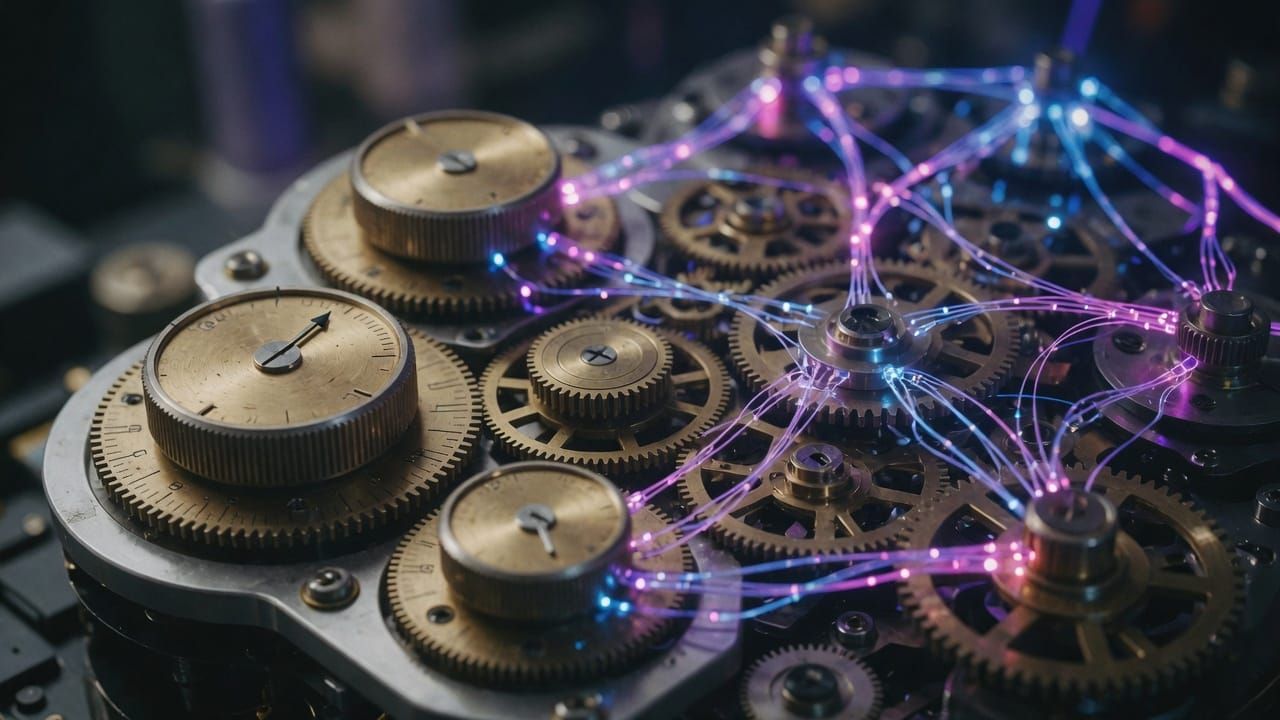
Fine-tuning is an essential technique in artificial intelligence that allows you to adapt a model already trained on enormous amounts of data to a specific task or domain. Instead of starting from scratch, you start with a powerful model like GPT or BERT and fine-tune it with your own data. This approach makes AI accessible even to beginners who have limited resources.
What is fine-tuning exactly?
Imagine a pre-trained model as a student who has read millions of books: it possesses general knowledge. Fine-tuning involves giving it additional lessons on a specific subject, such as medicine or law. The model retains its foundational skills while becoming an expert in your domain.
- It involves additional training on a targeted dataset.
- The model's weights are slightly adjusted, not reset.
- The result is a specialized model without losing its general capabilities.
Why use fine-tuning rather than training from scratch?
Training a model from scratch requires millions of dollars and months of computation. Fine-tuning, on the other hand, can be performed on a laptop or via affordable cloud services. It also enables better performance on specific tasks, such as bank fraud detection or generating legal summaries.
- Massive savings in time and computational resources.
- Better accuracy in niche domains.
- Ability to work with relatively small datasets (a few thousand examples).
Key steps to fine-tune a model
The process generally follows four clear phases. First, choose a base model adapted to your language and task. Next, prepare and clean your training data. Then launch the training by adjusting hyperparameters like the learning rate. Finally, evaluate the results on test data and iterate if necessary.
- Selection of the pre-trained model (e.g.: CamemBERT for French).
- Formatting the data into question-answer pairs or text-label.
- Training with frameworks like Hugging Face Transformers.
- Evaluation and deployment of the fine-tuned model.
A Concrete Example with Code
Here is a simple example of using the Hugging Face library to fine-tune a sentiment classification model:
from transformers import Trainer, TrainingArguments, AutoModelForSequenceClassification
model = AutoModelForSequenceClassification.from_pretrained("camembert-base", num_labels=2)
# Training with your data
training_args = TrainingArguments(output_dir="./results", num_train_epochs=3)
trainer = Trainer(model=model, args=training_args, train_dataset=dataset)
trainer.train()
Best Practices and Pitfalls to Avoid
Always start with a small dataset to test. Monitor overfitting using cross-validation. Choose a low learning rate (often between 1e-5 and 5e-5) to avoid destroying the original model's knowledge. Document your experiments to reproduce good results.
- Use high-quality, well-annotated data.
- Avoid too many epochs on small datasets.
- Test the model on out-of-distribution examples.
Fine-tuning democratizes AI by allowing everyone to adapt powerful models to their own projects. Whether you're a developer, researcher, or entrepreneur, this technique offers you an efficient shortcut to customized solutions. Don't hesitate to experiment with open source tools: the first results often come faster than you think!
💬 Have a question or want to go further? Join the community on Discord: https://discord.gg/GwhUKccQcM