Understanding Clustering: Demystifying Unsupervised Learning
Discover how clustering automatically groups similar data without labels, a key technique in unsupervised learning.
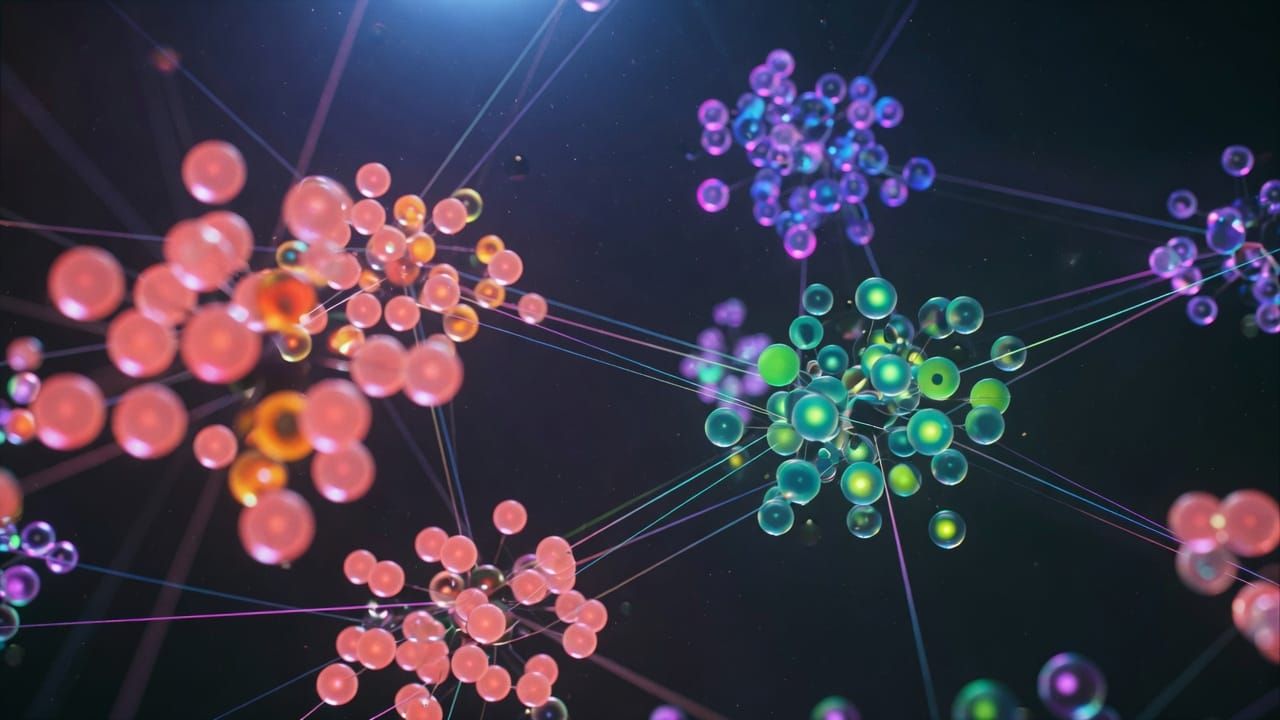
Unsupervised learning is a fascinating branch of artificial intelligence that allows machines to explore data without any prior indication. Unlike supervised learning which relies on labeled examples, clustering, or grouping, naturally identifies hidden structures. Imagine sorting fruits without knowing their names: you classify them by size, color, and shape. That's exactly what clustering does with your data.
What is unsupervised learning?
In unsupervised learning, the algorithm receives only raw data and must extract patterns by itself. There are no “correct answers” provided in advance. This makes it ideal for exploring large volumes of information, such as customer databases or unannotated images. Clustering is its most common application: it partitions the data into coherent groups called clusters.
The Principle of Clustering Explained
Clustering measures the similarity between data points, often using Euclidean distance. Nearby points are grouped together while distant points form distinct clusters. This approach reduces the complexity of a dataset by identifying natural segments. For example, customers with similar purchasing behaviors will automatically be placed in the same group.
- Simplicity: no need for costly labels to produce.
- Discovery: reveals unexpected insights in the data.
- Flexibility: applies to many domains such as market segmentation or anomaly detection.
Concrete Examples of Use
In e-commerce, clustering segments customers according to their purchasing habits to offer personalized recommendations. In biology, it groups genes with similar behaviors. Banks use it to detect fraudulent transactions by isolating unusual behaviors. These examples show how clustering transforms raw data into concrete actions without prior human intervention.
The K-Means Algorithm Step by Step
K-Means is the most popular clustering algorithm. It requires choosing the number of clusters (k) in advance. The algorithm then places k random centroids, assigns each point to the nearest centroid, recalculates the centroids, and repeats until convergence. It is simple, fast, and effective on well-separated data.
from sklearn.cluster import KMeans
kmeans = KMeans(n_clusters=3)
kmeans.fit(data)
labels = kmeans.predict(data)
Advantages, Limitations, and Practical Tips
Clustering is quick to implement and does not require labeled data. However, choosing the right number of clusters can be tricky and results vary depending on the initialization. Use the elbow method to determine k and normalize your data for better results. Test multiple algorithms like DBSCAN for complex cluster shapes.
Clustering opens the door to autonomous data exploration and serves as a powerful first step before applying more advanced techniques. By mastering these concepts, you'll be ready to extract value from your largest datasets.
💬 Have a question or want to go further? Join the community on Discord: https://discord.gg/GwhUKccQcM