Understanding the Transformer Architecture and the Attention Mechanism
Discover how attention revolutionizes sequence processing in AI, the foundation of models like GPT and BERT.
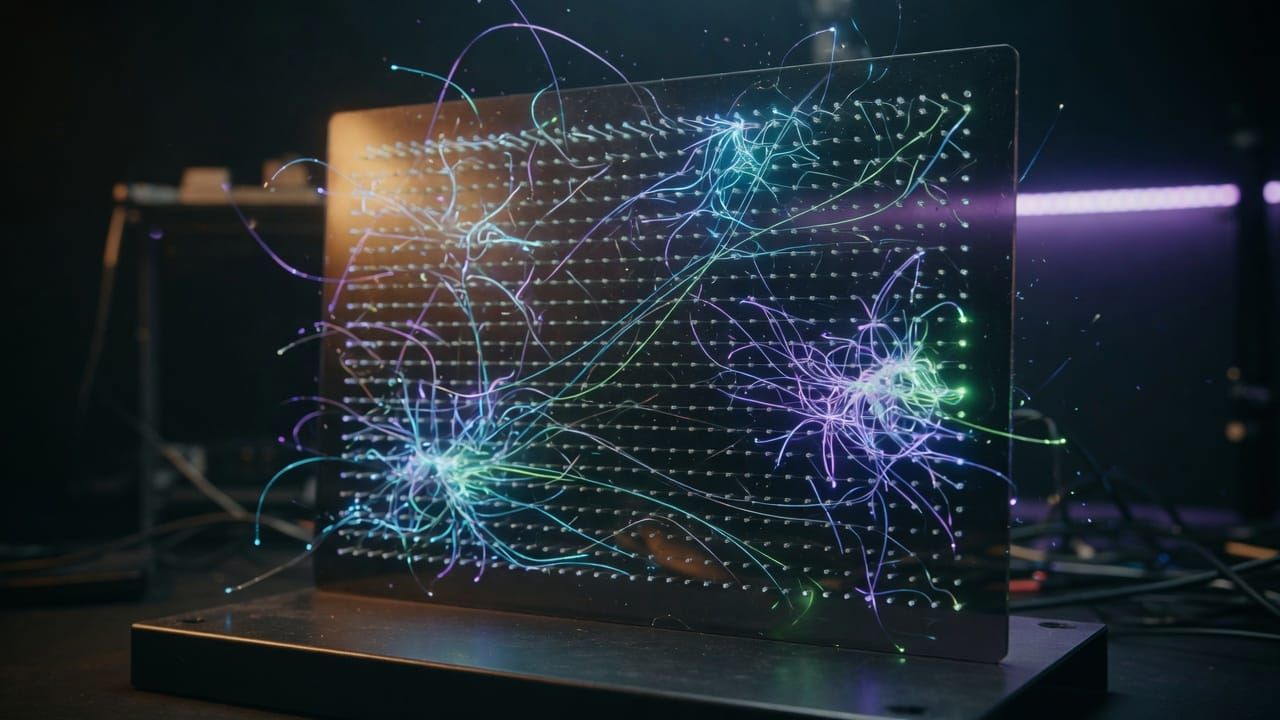
Imagine reading a long sentence and having to remember every word to understand the overall meaning. This was the challenge that older language processing models faced. Today, Transformers have changed the game thanks to their attention mechanism. This article explains in a simple and concrete way how this architecture works and why it dominates modern AI.
The Challenge of Long Sequences Before Transformers
Before 2017, recurrent neural networks (RNNs) and LSTMs processed text word by word. They struggled with long sentences because information faded gradually. For example, in « The cat that I saw yesterday in the park was black », the link between « cat » and « black » became difficult to maintain over long distances.
- Loss of information on extended sequences
- Slow sequential processing, impossible to parallelize
- Difficulty capturing long-range dependencies
The Attention Mechanism: Focusing on the Essentials
Attention enables the model to “look at” all words simultaneously and weigh their importance. Instead of processing sequentially, it calculates a relevance score between each pair of words. In the sentence « Je vais à la banque pour retirer de l'argent », the word « banque » draws more attention to « argent » than to « vais ».
- Similarity calculation between queries and keys
- Weighting of values according to these scores
- Ability to process the entire sequence in parallel
The Transformer Architecture: Encoder and Decoder
A Transformer consists of an encoder that understands the input text and a decoder that generates the output. Each layer stacks attention blocks and simple neural networks. This modular structure enables training very deep models such as BERT or GPT.
- Encoder: analyzes and represents the input
- Decoder: produces the response step by step
- Residual connections and normalization to stabilize learning
Multi-Head Attention for a Rich Vision
Instead of a single attention mechanism, Transformers use multiple “heads” that simultaneously learn different aspects. One head can capture grammar, another semantic relationships. This is like multiple experts analyzing the text from complementary angles.
- Multiple projections of the input data
- Concatenation of the results for a complete representation
- Better capture of the nuances of language
A Simple Example of Attention Calculation
scores = Q @ K.T / sqrt(d_k)
attention_weights = softmax(scores)
output = attention_weights @ V
Practical Applications and Getting Started
Transformers today power translation, chatbots, code generation, and even image analysis. To get started, try libraries like Hugging Face Transformers with pre-trained models. Experiment on simple tasks like sentiment classification before diving into full training.
In summary, the Transformer architecture and its attention mechanism have made current generative AI possible by enabling models to efficiently process vast contexts. Take the time to experiment with accessible tools: you will quickly see why this innovation remains at the heart of all recent advances in artificial intelligence.
💬 Have a question or want to go further? Join the community on Discord: https://discord.gg/GwhUKccQcM