Understanding the Transformer Architecture and the Attention Mechanism
Discover how the attention mechanism has enabled Transformers to revolutionize natural language processing.
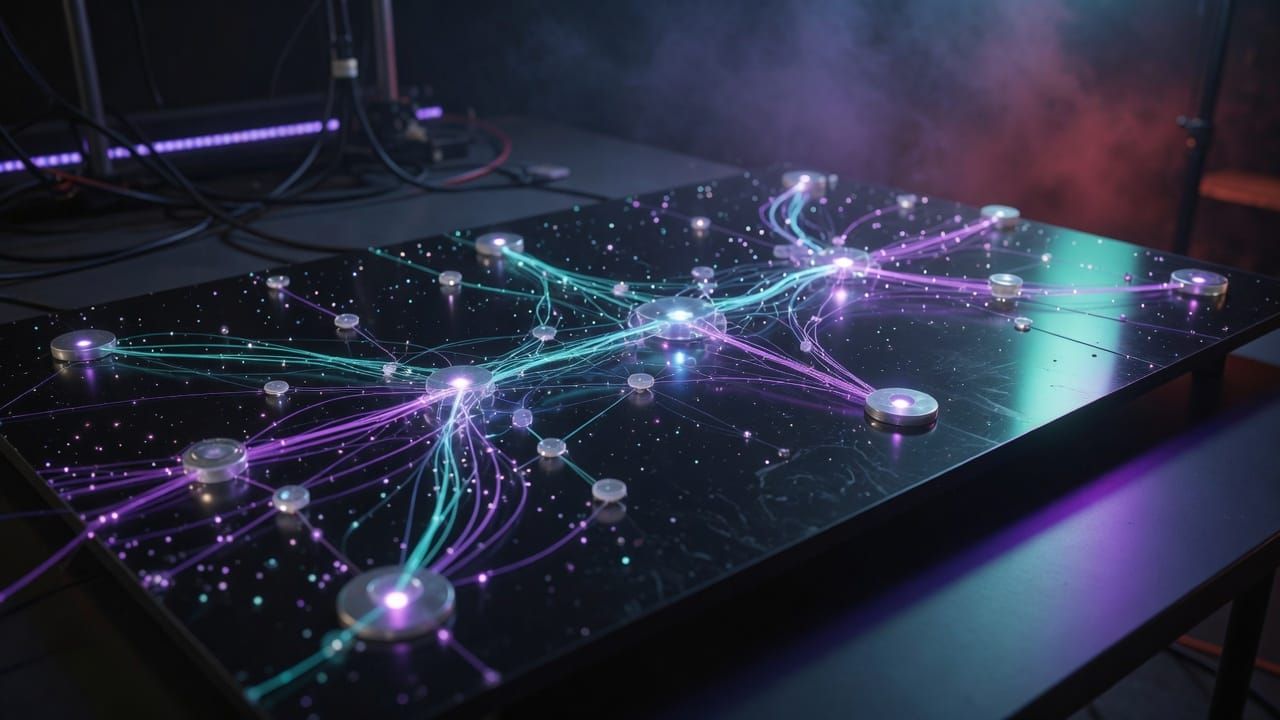
Language models like GPT or BERT have transformed our daily lives, from voice assistants to automatic translators. Behind these advances lies a revolutionary architecture: the Transformer, introduced in 2017. At the heart of this model is the attention mechanism, which allows sequences to be processed in parallel and more efficiently than previous approaches. In this article, we will explore these concepts step by step to make them accessible to beginners.
Why Have Transformers Replaced RNNs?
Before Transformers, recurrent neural networks (RNNs) and LSTMs dominated sequence processing such as text. They processed words one at a time, making training slow and difficult on long texts. Transformers solve this problem by processing the entire sequence in parallel, while capturing relationships between words, even distant ones.
- Parallelization: multiple words analyzed simultaneously on GPU.
- Better handling of long dependencies: a word at the beginning directly influences a word at the end.
- Scalability: larger and more performant models possible.
The Attention Mechanism Explained Simply
Imagine you are reading a sentence: “The cat, which was on the mat, meowed loudly.” To understand “meowed,” your brain links this verb to the subject “cat” rather than to “mat.” Attention does exactly that: it calculates an importance score between each pair of words. Each word receives a weighted “attention” from the other words in the sentence.
- Attention: weights that indicate how strongly two words are related.
- Concrete example: in a translation, “bank” receives more attention from “river” than from “money”.
Self-Attention and Multi-Head Attention
In the Transformer, we use “self-attention”: each word attends to all other words in the same sequence. To enrich this understanding, we use multiple attention “heads” (multi-head) that capture different types of relations: syntax, semantics, etc. These heads are then combined.
- Self-attention: internal relations within the sequence.
- Multi-head: multiple simultaneous perspectives for a rich representation.
The Encoder-Decoder Architecture of Transformers
A classic Transformer consists of two parts: the encoder that processes the input text and the decoder that generates the output. Each layer contains attention blocks and feed-forward neural networks. Residual connections and normalization help stabilize the training of deep models.
- Encoder: transforms the input into contextual representations.
- Decoder: generates the output using attention on the encoder and on itself.
- Positional encoding: adds position information because attention ignores order.
Real-World Applications and Impact Today
Transformers are everywhere: translation (Google Translate), text generation (ChatGPT), image analysis (Vision Transformers), and even in chemistry for predicting molecules. Their flexibility has enabled unifying numerous AI domains under a single architecture.
- Massive language models trained on billions of words.
- Transfer learning: fine-tuning on specific tasks with limited data.
In summary, the attention mechanism has allowed Transformers to overcome the limitations of sequential models and pave the way for modern AI. Understanding these foundations will help you better grasp future advances such as multimodal models. Feel free to experiment with libraries like Hugging Face to see attention in action!
💬 Have a question or want to go further? Join the community on Discord: https://discord.gg/GwhUKccQcM